
[1] Chromium — Fact Sheet for Health Professionals
National Institutes of Health, Office of Dietary Supplements.
View sourceA deeper ingredient-by-ingredient analysis of the publicly disclosed formula, including what human studies suggest, where evidence is mixed, and why undisclosed doses matter.
Reviewed and updated: September 22, 2026
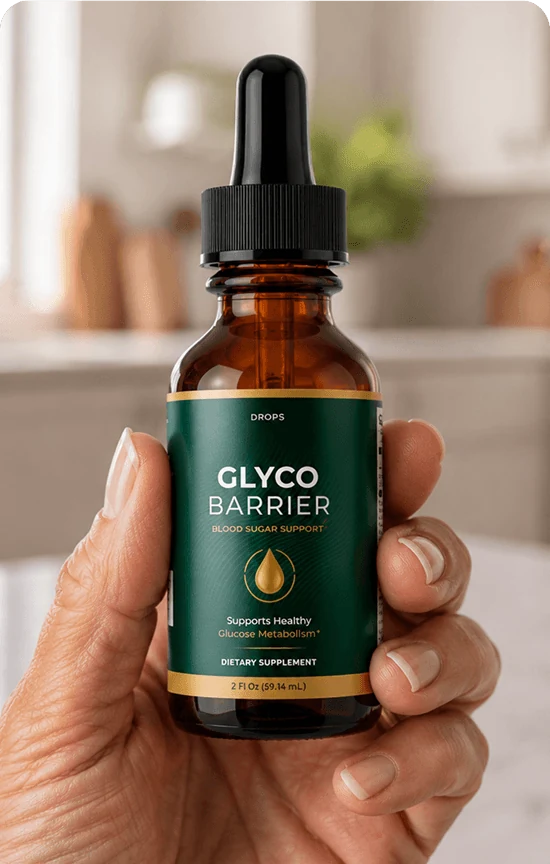
Glyco Barrier is described as combining Chromium Picolinate with a 200 mg proprietary herbal blend containing 20 ingredients. The description names Gymnema Sylvestre, Ginseng Root, Green Tea Leaf Extract and Maca Root.[11]
The key limitation is not whether those ingredients are present; it is that the complete blend breakdown and individual botanical amounts are not provided in the description reviewed.
This table summarizes the most relevant evidence we found without converting ingredient research into a claim about the finished product.
| Ingredient | Role in the formula | Research related to glucose/metabolism | Main limitation | Scientific source |
|---|---|---|---|---|
| Chromium Picolinate | Declared separately from the herbal blend. | Chromium is involved in macronutrient metabolism and has been studied for glycemic control. Meta-analyses report possible benefits in diabetes, while evidence outside diabetes is less convincing. | Product dose of chromium was not available in the text description we reviewed; study results vary by dose, chromium form and population. | Suksomboon et al., 2014 NIH ODS Chromium |
| Gymnema Sylvestre | Named within the 200 mg proprietary blend. | A systematic review/meta-analysis of 10 studies reported changes in fasting glucose, post-meal glucose and HbA1c; a small placebo-controlled trial also examined impaired glucose tolerance. | Very high heterogeneity in the meta-analysis and no disclosed Gymnema amount in Glyco Barrier. | Devangan et al., 2021 Clinical trial, PMID 32460589 |
| Green Tea Leaf Extract | Named within the proprietary blend. | A meta-analysis of 27 randomized trials found a small reduction in fasting glucose but no significant overall effect on fasting insulin or HbA1c. | Green-tea products vary substantially; Glyco Barrier does not state the extract standardization, amount or caffeine content in the description reviewed. | Xu et al., 2020 NCCIH Green Tea |
| Ginseng Root | Named within the proprietary blend. | A meta-analysis of Panax ginseng trials reported a modest reduction in fasting glucose, with no significant overall effect on several other glycemic markers. | The product description says only “Ginseng Root”; it does not specify that the ingredient is Panax ginseng, so Panax findings cannot be directly assigned to the product. | Shishtar et al., 2014 NCCIH Asian Ginseng |
| Maca Root | Named within the proprietary blend. | Human trials have studied maca primarily for other outcomes. One randomized study reported a glucose change with black maca, while another found no glucose difference versus placebo. | The product does not specify maca variety/extract or dose, and the overall human evidence is not strong enough to present maca as a primary glucose-control ingredient. | Gonzales-Arimborgo et al., 2016 PMID 24931003 |
Chromium is a trace element involved in carbohydrate, lipid and protein metabolism. The NIH notes that chromium may influence insulin action, although the precise biological mechanism remains unresolved.[1]
Clinical evidence is not uniform. A 2014 systematic review and meta-analysis of randomized trials reported improvements in some glycemic measures among people with diabetes and noted stronger signals in some chromium-picolinate studies.[2]
A 2021 systematic review and meta-analysis included 10 studies with 419 participants and reported reductions in fasting glucose, postprandial glucose and HbA1c after Gymnema supplementation. However, heterogeneity was high, meaning study results differed substantially.[3]
A separate randomized, double-blind, placebo-controlled study in people with impaired glucose tolerance used a defined Gymnema preparation and measured fasting glucose, A1c, oral-glucose-tolerance and insulin-related outcomes.[4]
Green tea has been studied extensively, but glucose-related results vary. A 2020 meta-analysis of 27 randomized trials involving 2,194 participants reported a small reduction in fasting glucose, while fasting insulin and HbA1c were not significantly changed overall.[5]
Safety depends on preparation and dose. NCCIH notes that green-tea extract supplements can cause gastrointestinal symptoms and increased blood pressure, and rare liver injury has been reported, particularly with concentrated extract products.[6]
A systematic review and meta-analysis of 16 randomized controlled trials involving the genus Panax reported a modest reduction in fasting glucose but no significant overall effect on fasting insulin, HbA1c or HOMA-IR.[7]
NCCIH similarly describes research on Asian ginseng and blood-sugar control as inconclusive and conflicting overall.[8]
Maca has human clinical research, but most of it is not centered on glucose control. In a 2016 randomized trial of red and black maca extracts, black maca was associated with lower blood glucose in that study context.[9]
By contrast, a randomized crossover study in postmenopausal women reported no glucose difference between maca and placebo.[10]
The product description states that the blend contains 20 ingredients but names only a subset. We do not guess the remaining components.
The 200 mg figure applies to the proprietary blend as a whole, not to each listed herb.
Species, standardization, active-compound content and caffeine content are not consistently provided in the text description reviewed.
National Institutes of Health, Office of Dietary Supplements.
View sourceSuksomboon N, Poolsup N, Yuwanakorn A. Journal of Clinical Pharmacy and Therapeutics. 2014;39(3):292–306. DOI: 10.1111/jcpt.12147.
View sourceDevangan S, Varghese B, Johny E, Gurram S, Adela R. Phytotherapy Research. 2021;35(12):6802–6812. DOI: 10.1002/ptr.7265.
View sourceRandomized, double-blind, placebo-controlled clinical trial. Journal of Medicinal Food. 2020. PMID: 32460589.
View sourceXu R, Bai Y, Yang K, Chen G. Nutrition & Metabolism. 2020;17:56. DOI: 10.1186/s12986-020-00469-5.
View sourceNational Center for Complementary and Integrative Health.
View sourceShishtar E, Sievenpiper JL, Djedovic V, et al. PLOS ONE. 2014;9(9):e107391. DOI: 10.1371/journal.pone.0107391.
View sourceNational Center for Complementary and Integrative Health.
View sourceGonzales-Arimborgo C, et al. Pharmaceuticals (Basel). 2016;9(3):49. DOI: 10.3390/ph9030049.
View sourceRandomized, double-blind, placebo-controlled crossover study. Climacteric. PMID: 24931003.
View sourceManufacturer/marketer product page reviewed September 2026. Used for formula, directions, package and guarantee statements; commercial claims are treated as manufacturer-reported.
View source